
EMDR therapy was initially developed to treat trauma and over 30 randomized controlled trials have provided empirical validation of its efficacy. EMDR therapy has been assigned to Category A as strongly recommended for the treatment of trauma by the Department of Veterans Affairs and Department of Defense, has been determined to be an effective treatment for Acute Stress Disorder and Post-traumatic Stress Disorder by the American Psychiatric Association, and has been included in SAMHSA's National Registry of Evidence-based Programs and Practices for the reduction of trauma-related stress, anxiety, and depression. The World Health Organization has formally approved the recommendation of EMDR therapy for adults and children with PTSD.
MAKING THE PAST LESS PRESENT
What is EMDR Therapy?
I have found EMDR therapy (Eye Movement Desensitization and Reprocessing) to be a powerful and efficient method to address the symptoms of post-traumatic stress, complex developmental trauma, anxiety, depression, and eating disorders. It helps resolve memories that have become stuck, allowing the brain to process and heal from experiences that may still feel very much present.
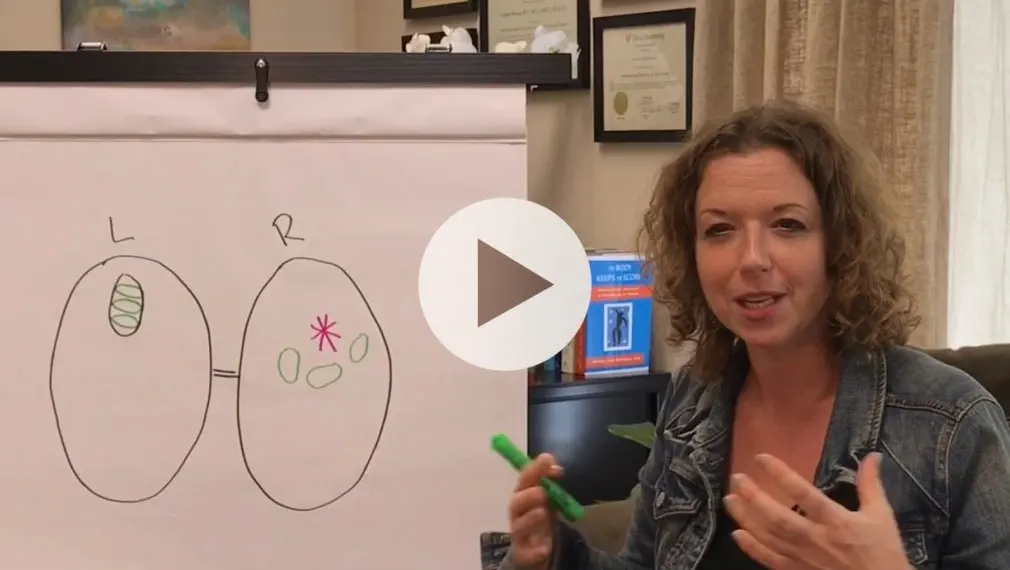

How EMDR Works
EMDR therapy involves targeting memories that have become neurologically stuck using bilateral stimulation (usually in the form of eye movement or alternating tactile buzzers) to accelerate the brain's capacity to process and resolve the troubling material. These frozen memories can be either Big T traumas such as violence, rape, or life-threatening injury, or Little T traumas, meaning small but powerful adverse life events such as being called a name or feeling left out by peers. These memories can also involve the absence of what was needed for the development of a secure attachment system, such as insufficient nurture, protection, stability, or guidance. These unresolved memories and unmet needs can make the past feel like it is still very much present and force current life experiences to be filtered through a negative, distorted lens.
The Brain's Natural Healing Process
The brain appears to have a natural healing process for dealing with difficult life events, much like the body has a natural healing process for cuts and broken bones. EMDR therapy can be likened to cleaning out an infected wound or setting a bone, so that the body can be effective in restoring healthy functioning. While other types of therapy are effective in allowing insight into the root causes of difficult emotions and providing tools for challenging negative thought and behavior patterns, I have found that EMDR therapy allows changes in emotional, cognitive, and behavioral response patterns to occur spontaneously.
What to Expect
This is not to say that the process of EMDR therapy is easy. It is a multi-phase process, often involving significant assessment and preparation, as well as strategic targeting of pivotal past experiences, present triggers to distress, and related future challenges. Like the analogy of cleaning a wound or setting a bone, it can be an intense experience to activate the thoughts, feelings, and sensations of the memories that fuel a person's fear, anger, and sadness. However, the reward is often that the source of the pain is then neutralized, as the brain integrates the positive and reality-based perspectives of safety, efficacy, and self-worth.
The Brain's Natural Healing Process
The brain appears to have a natural healing process for dealing with difficult life events, much like the body has a natural healing process for cuts and broken bones. EMDR therapy can be likened to cleaning out an infected wound or setting a bone, so that the body can be effective in restoring healthy functioning. While other types of therapy are effective in allowing insight into the root causes of difficult emotions and providing tools for challenging negative thought and behavior patterns, I have found that EMDR therapy allows changes in emotional, cognitive, and behavioral response patterns to occur spontaneously.
What to Expect
This is not to say that the process of EMDR therapy is easy. It is a multi-phase process, often involving significant assessment and preparation, as well as strategic targeting of pivotal past experiences, present triggers to distress, and related future challenges. Like the analogy of cleaning a wound or setting a bone, it can be an intense experience to activate the thoughts, feelings, and sensations of the memories that fuel a person's fear, anger, and sadness. However, the reward is often that the source of the pain is then neutralized, as the brain integrates the positive and reality-based perspectives of safety, efficacy, and self-worth.
What EMDR Can Treat
Rape, Sexual Assault & Sex Trafficking
Domestic Violence
Violent Crime
Childhood Sexual Abuse, Physical Abuse, Emotional Abuse & Neglect
Early Attachment Disruption
Disordered Eating & Body Image including Anorexia, Bulimia & Binge Eating
Social Rejection
Anxiety including Panic, Social Phobia & OCD
Depression
Traumatic Injury (e.g. Burns, Car Accidents, Medical Trauma)
Dissociative Disorders
Compulsions & Addictions
“All of the broken pieces, do not avoid them. Hold them gently.
One day soon, they will shine like stars in your new sky, the sky of the beautiful life you are creating.”
- S.C. Lourie

The Effectiveness of EMDR Therapy
My Approach to EMDR
I have become an EMDRIA Certified Therapist, Approved Consultant, and Approved Trainer, with a commitment to ongoing training in order to most effectively use EMDR therapy to address the varied needs of my clients. I specialize in the modification of EMDR therapy to address complex PTSD, developmental trauma, and dissociation.
I have found that EMDR therapy can be delivered safely and effectively via telehealth, even in highly complex cases. Each situation is evaluated individually to ensure it is an appropriate model of care.
If you are considering EMDR therapy and would like to prepare before beginning, my self-help resources offer a meaningful place to start.
If you are a clinician interested in deepening your own EMDR practice, I offer consultation and mentorship through my private practice and EMDRIA-approved training through Precision EMDR Academy.
I have found that EMDR therapy can be delivered safely and effectively via telehealth, even in highly complex cases. Each situation is evaluated individually to ensure it is an appropriate model of care.
If you are considering EMDR therapy and would like to prepare before beginning, my self-help resources offer a meaningful place to start.
If you are a clinician interested in deepening your own EMDR practice, I offer consultation and mentorship through my private practice and EMDRIA-approved training through Precision EMDR Academy.


Getting Started with EMDR
Choose your pathway to get started with EMDR therapy, training, or consultation.

Seeking EMDR Therapy?
I see a small number of clients via telehealth in California by referral and have limited availability.
Inquire About Availability →
EMDR Consultation
Interested in group or individual consultation? Complete the interest form to get started.
Consultation Interest Form →
EMDR Training
Looking for EMDR basic or advanced training? Visit Precision EMDR Academy for course information and enrollment.
PrecisionEMDR.com →